
Pasture Irrigation Systems: How Portable Reels Benefit Pastures
 mwhussian

 Blog
Dry weather can slow pasture growth just when livestock need dependable grazing. Pasture irrigation systems help farmers supply water when rainfall is low.
Choosing the right system takes more than buying a sprinkler. Field shape, soil conditions, available water, and grazing schedules all affect the results. For properties with separate paddocks or changing watering needs, portable irrigation reels offer a practical option.
Why Does It Matter?
Grass needs moisture to recover after grazing and continue producing forage. When the root zone dries out, growth slows, even if plants still appear green. Proper irrigation can support regrowth during dry periods, although results depend on grass species, soil conditions, and weather.
According to Oregon State University Extension, pasture irrigation plans should consider soil water-holding capacity and evapotranspiration. Evapotranspiration is water lost through evaporation and plant use.
More watering isn’t always better. Saturated ground can contribute to runoff, muddy conditions, and soil compaction. Effective pasture irrigation systems should deliver water based on actual pasture needs rather than a fixed schedule.
How Do Portable Pasture Irrigation Systems Work?
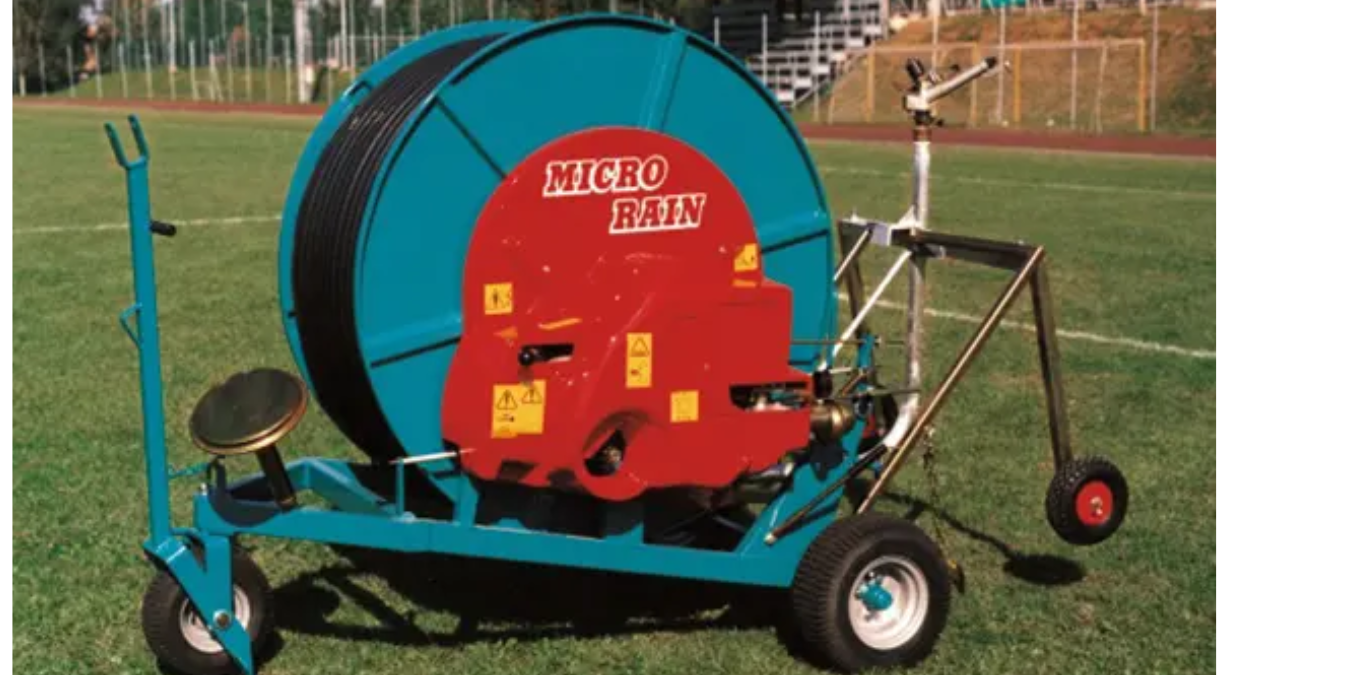
A hose-reel traveler waters a strip of ground using a sprinkler mounted on a wheeled cart. Operators position the reel, extend the hose and cart, and connect the equipment to an appropriate water supply.
As the machine slowly winds in the hose, the sprinkler travels toward the reel, distributing water along its path. After completing a pass, operators can reposition the equipment for another lane or move it to a different pasture.
This makes portable pasture irrigation systems useful where permanent irrigation infrastructure would be difficult or expensive to install.
Travel speed also influences watering depth. Slower retraction generally applies more water over a given area, while faster movement reduces the amount applied.
What Are the Benefits?
Portable pasture irrigation systems offer several advantages for farms and ranches managing multiple grazing areas.
- Flexible coverage: Equipment can move between fields or paddocks instead of remaining dedicated to one location.
- Targeted watering: Operators can concentrate on areas experiencing dry conditions rather than watering an entire property.
- Less permanent infrastructure: Traveling systems reduce the need for permanently installed sprinklers throughout every pasture.
- Adjustable application: Travel speed and sprinkler settings can help control watering depth.
- Adaptability: Portable equipment can accommodate different field layouts when properly sized and positioned.
However, these benefits come with considerations. Irrigation reels require setup between passes, suitable equipment access, and adequate pumping capacity.
Wind can also affect sprinkler distribution. Successful irrigation depends on matching equipment capabilities to actual field conditions.
How Do You Choose the Right System?
Choosing suitable pasture irrigation systems starts with understanding the property and available water supply.
Important considerations include:
1. Field size and layout: Measure the acreage, field width, and travel distance. This helps you choose hose lengths and coverage needs.
2. Water availability: Confirm that the source provides enough flow and operating pressure for the equipment.
3. Soil conditions: Consider how quickly water infiltrates the ground and whether excessive application could cause runoff.
4. Grazing schedules: Plan watering around livestock movement. This reduces equipment conflicts and prevents extra traffic on wet ground.
5. Equipment mobility: Consider how frequently the reel must move and what machinery is available for repositioning.
The University of Missouri Extension explains that traveling irrigation systems provide flexible coverage but can require more energy and repositioning labor than certain alternatives.
The best choice isn’t necessarily the largest machine. It’s the one that matches the property’s watering requirements.
How Often Should Pastures Be Watered?
There is no universal watering schedule. Water requirements change with rainfall, temperature, plant growth, and soil moisture.
Instead of watering only when grass appears dry, monitor moisture below the surface. Irrigation should replace water used by plants without exceeding the soil’s ability to absorb it.
If water begins pooling or running downhill, adjustments to application rate, nozzle selection, or travel speed may be necessary.
Coordinating irrigation with rotational grazing also helps keep equipment and livestock separated during watering.
Explore Pasture Irrigation Systems at Best Irrigation Reel
At Best Irrigation Reel, we offer OCMIS irrigation reels and Micro Rain systems.
They fit different acreage sizes and water-delivery needs.
Our Micro Rain MR58, for example, works well in pastures and can water up to two acres in one pass. It also offers variable speed control and automatic shutdown when retracted.
Whether you manage small grazing areas or large farms, our equipment can help you find the right solution.
Contact our team to discuss your field dimensions, water supply, and equipment requirements.