
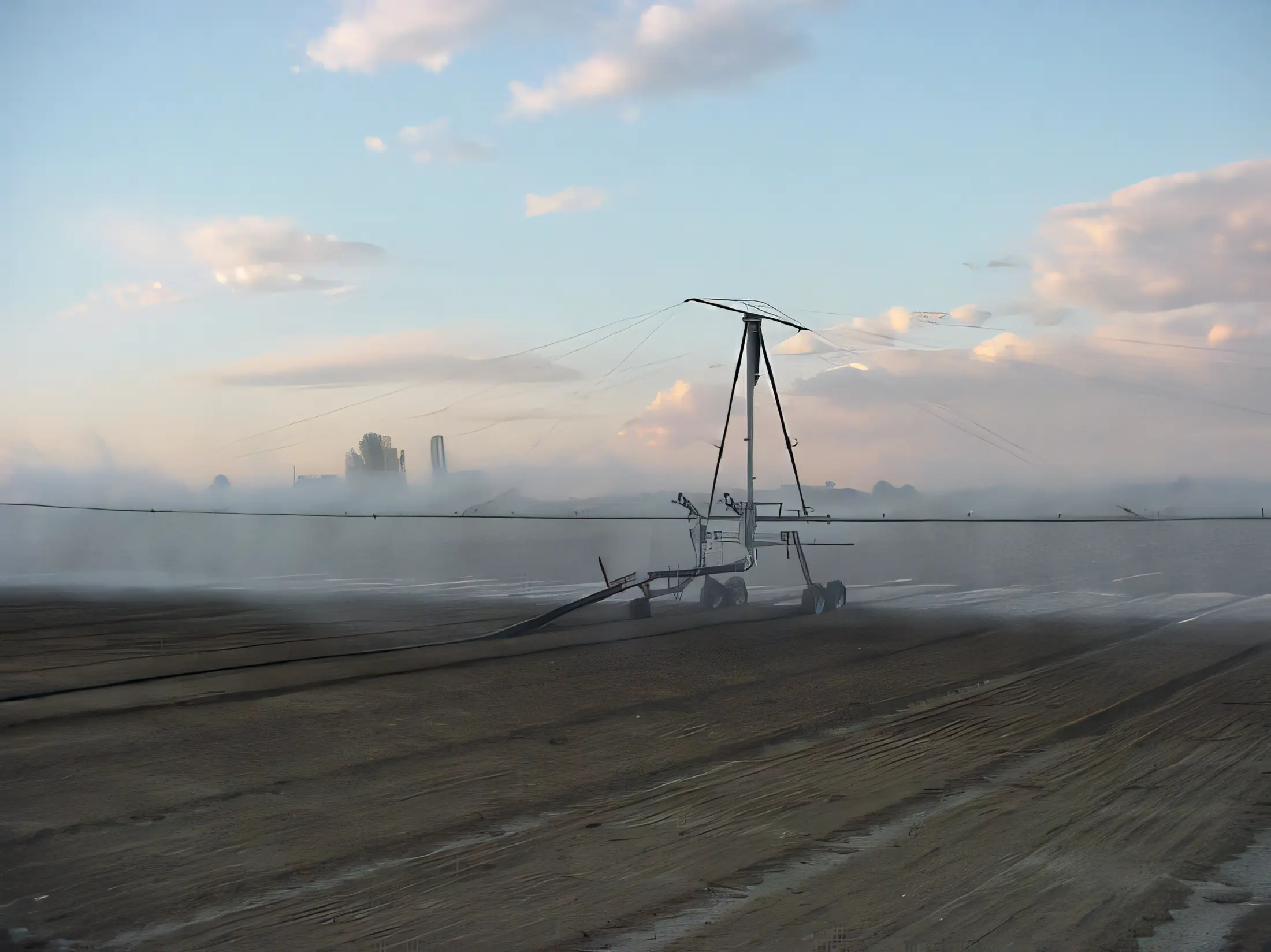
Irrigation Boom Benefits: When a Spray Boom Makes Sense on a Traveler
 mediaworkshailey
 Blog
Blog
If you have ever watched water disappear into the wind (or run off the end of a pass), you already understand why an irrigation boom is worth considering. Instead of relying on a single high-trajectory stream, a boom-style setup spreads water across a wider strip using multiple outlets, which can help keep application more controlled in the conditions that cause waste.
What An Irrigation Boom Is
It is a spray “wing” mounted behind a traveler cart that distributes water through multiple nozzles along the boom. The concept is simple: apply water more evenly across the irrigated strip without depending on one long-throw spray pattern.
At Best Irrigation Reel, we offer OCMIS spray boom options in several widths (for example, 13 m, 26 m, 30 m, up through 44 m), which gives growers flexibility based on field layout and target strip width.
Why It Can Help With Drift And Distribution
In many operations, wind is the silent thief. Extension research comparing big-gun style sprinklers and boom-type carts notes that big guns can be vulnerable to wind drift and evaporation and may struggle with distribution uniformity compared to other approaches.
Because a spray boom typically operates with a lower trajectory and distributes water across multiple nozzles, an irrigation boom can be a practical choice when your goal is to keep more water landing in the intended zone rather than outside the crop row or beyond the lane.
When A Boom Is A Strong Fit
An irrigation boom often makes the most sense in these common scenarios:
- Windy Irrigation Windows: When wind is frequent during your normal run times, controlling drift becomes a priority.
- Uniformity Matters Most: If you are trying to avoid dry strips and hot spots, distribution can make a noticeable difference.
- Delicate Crops Or “Softer” Application Needs: OCMIS describes its spray booms as providing “soft” irrigation at low pressure with a nebulized jet for delicate crops.
- You Want Wide Coverage Per Pass: Wider strip widths can reduce the number of travel lanes, depending on your spacing plan and field shape.
Two Quick Product Examples From Best Irrigation Reel
To make this more concrete, here are two examples from our OCMIS boom lineup:
- 26 M Boom: Listed as a 26 m spray boom with a standard trolley, positioned for “soft” irrigation at low pressure with a nebulized jet for delicate crops.
- 44 M Boom: A 44 m option that can be configured with a standard or offset trolley, with the same emphasis on low-pressure, nebulized, gentle irrigation.
These examples highlight how an irrigation boom selection often comes down to desired strip width and how you want the cart positioned behind the traveler.
When A Big Gun May Still Make Sense
A boom is not automatically the best fit for every field. A big gun can still make sense when you need maximum throw distance, you have the pressure to run it well, and wind is typically calm during your irrigation windows. If your field layout favors long throws and fewer passes, it can remain a practical option.
How To Decide Without Overthinking It
If you are deciding whether an irrigation boom is right for your operation, start with a simple checklist:
- What is your typical wind like during irrigation runs?
- Are you prioritizing uniformity or maximum reach?
- What flow and pressure are actually available at the hydrant or pump?
- Do your crops benefit from gentler application?
- How many lanes can you realistically run per set?
Putting It To Work With Best Irrigation Reel
The right irrigation boom choice is the one that matches your field shape, your water supply, and your goals for coverage and consistency. Best Irrigation Reel’s OCMIS boom lineup offers multiple widths and trolley configurations to help you build a setup that fits how you irrigate in the real world.