
Irrigation Reel Basics: What a Hard Hose Traveler Is and Why Farms Use Them
 mediaworkshailey
 Blog
Blog
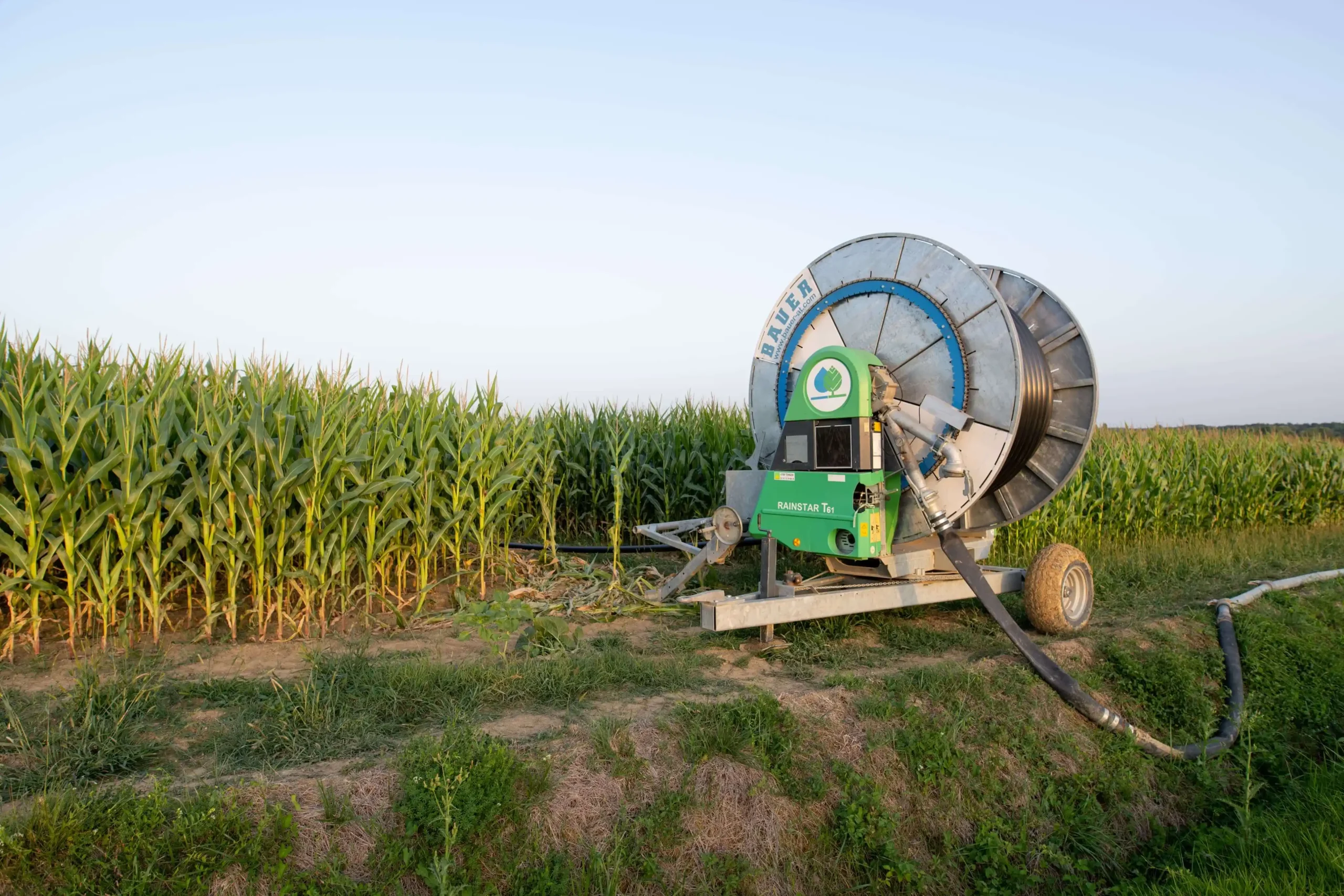
An irrigation reel (often called a hard hose traveler) is a portable irrigation system that helps deliver consistent water across a field without the permanent footprint of a pivot or the high infrastructure of buried drip. You connect the machine to your water source, pull the hose out to the start point, and the traveler slowly retracts the hose while the sprinkler cart (or gun) applies water on the way back.
What “Hard Hose Traveler” Actually Means
A hard hose traveler is built around three simple parts:
- A large polyethylene hose stored on a drum
- A sprinkler cart or gun at the end of that hose
- A drive system that retracts the hose at a controlled pace
As the hose winds back onto the drum, the cart moves steadily toward the machine, watering a consistent lane. This lane-by-lane approach is why farms like travelers for irregular field shapes, rented ground, rotation changes, or anywhere flexibility matters.
How An Irrigation Reel Retracts the Hose (Turbine Drive, Explained Simply)
Most modern travelers use the water moving through the system to power the retraction. In OCMIS and Micro Rain systems, that “engine” is a turbine drive: water flows past turbine fins, creating smooth power that drives a direct-mounted gearbox, which turns the drum and retracts the hose.
Why it matters: the drive system influences how efficiently the machine runs, especially when you’re working with limited flow or inlet pressure. OCMIS notes it developed and patented its Vario Rain turbine/gearbox to be highly efficient, requiring less water and pressure to run the gearbox—so more water and pressure can remain available for the sprinkler output.
Where A Traveler Fits Vs. Center Pivots and Drip
A hard hose traveler won’t replace every pivot or drip system—but it’s a strong “problem-solver” in a lot of real-world scenarios.
Compared to center pivots, a traveler can be easier to move between fields and better suited for odd corners, narrow parcels, and fields where a pivot isn’t practical.
Compared to drip, a traveler can require less permanent installation and can be repositioned quickly when cropping plans change.
This is why an irrigation reel often ends up being the go-to choice for operators who want flexibility without giving up reliability.
Why Farms Keep Coming Back to Irrigation Reels
Farms don’t buy travelers because they’re trendy. They buy them because they work season after season. Here are the benefits you’ll hear most often:
- Uniform application (when set up correctly)
With the right speed setting, sprinkler package, and lane spacing, travelers can deliver a predictable depth of water. - Portability and versatility
One machine can cover multiple blocks, fields, or even different properties—especially helpful for leased acreage or rotation-heavy operations. - Durability built for field conditions
OCMIS emphasizes long-lasting performance across its reel lines, including standard R-Series options and higher-feature Vario Rain models. - Performance at lower flows/pressures (model-dependent)
For example, OCMIS’ Turbo Speed approach is designed to reduce turbine load loss and provide usable speed ranges even with lower flows and inlet pressures.
A Quick Look at OCMIS Options (High Level)
If you’re exploring an irrigation reel through Best Irrigation Reel / OCMIS, you’ll typically see two major families:
- R-Series: a straightforward, proven hard hose traveler lineup (R1/R2/R3, etc.) that covers a wide range of farm needs. If you want a dependable, no-nonsense traveler, start with the R1 & 1A—a popular “workhorse” model with a 3-speed gearbox, mechanical trolley lift, and a broad range of hose options (ex: 63–82 mm diameters and lengths up to 300).
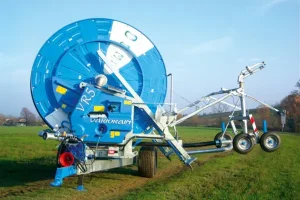
- Vario Rain Series: models built around OCMIS’ Vario Rain turbine/gearbox concept, focused on efficiency and reduced pressure drop. The VR4 is one of the best-known Vario Rain options, built around a 3-speed VR gearbox with synchronized speeds, telescopic hydraulic feet, and a standard equipment package that supports a wide range of hose diameters (75–120). The series is positioned for water saving with no significant pressure losses.
And if you’re irrigating turf, parks, or green spaces—or need compact portability—Micro Rain is positioned as a turbine-driven traveling reel solution with a strong durability focus.
Next Steps: Sizing the Right Irrigation Reel For Your Operation
The “right” irrigation reel depends less on brand buzz and more on matching the machine to your reality: your available flow (GPM), inlet pressure, hose diameter/length needs, lane spacing, and the sprinkler package you plan to run. If you start there, the model choice becomes much clearer—and you’ll end up with a setup that’s easier to operate, easier to maintain, and more consistent in the field.